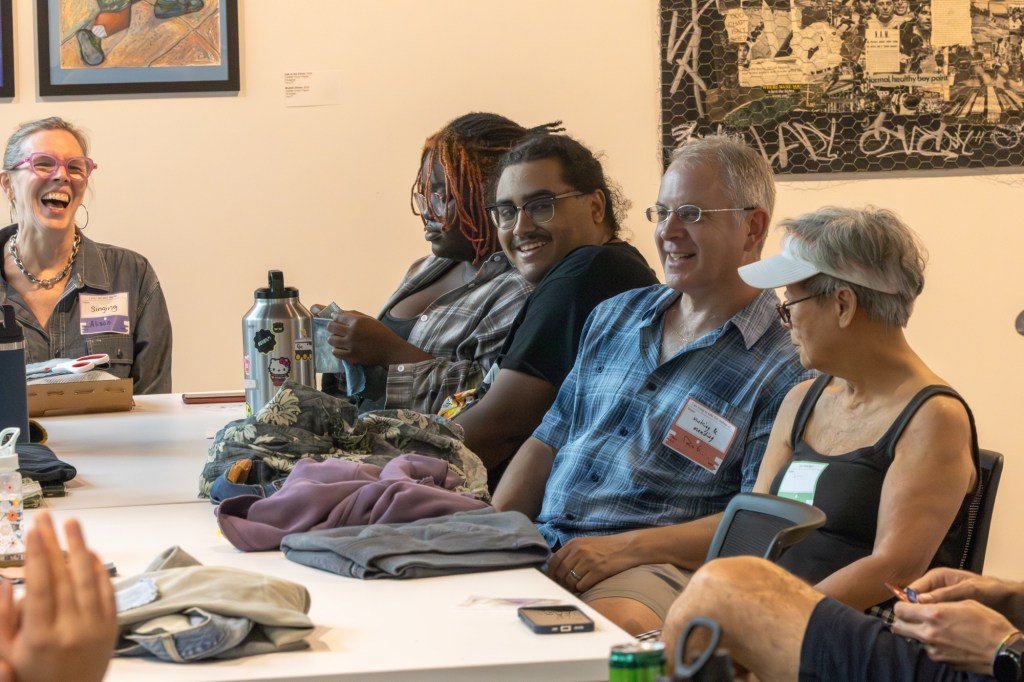
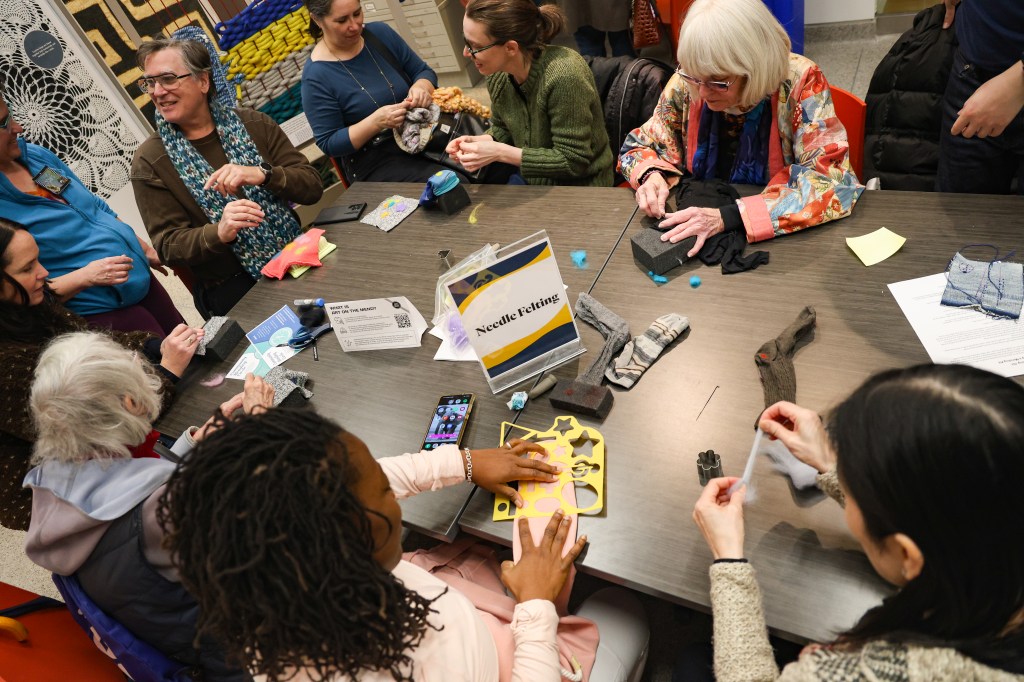
Visible mending circles are in-person opportunities to repair our clothing and textiles and connect with others. Historically, quilting circles have been a group of people who would gather to create on a quilt and have some time to connect and share stories. At Art on the Mend, we make it easy for communities to create visible mending circles by sharing skills, supplies, and resources.
Social connection is just as important as learning skills, so we get name tags and sit at one table where it is easy to talk. We strive to be accessible, approachable, and create a sense of belonging that goes beyond just being inclusive. Everybody adds value and is appreciated. You learn and you teach the next person. Everyone gets a voice about what we choose to learn, do, and how we contribute to the community. Our philosophy is all are welcome and everyone matters.
Why do we need visible mending circles?
Humans are wired for social connection, but we’ve become more isolated over time. Social connection is as essential to our survival as food and water, but today loneliness is more widespread. More than half of Americans feel lonely. We live in the world’s most individualistic country where our society prioritizes self-sufficiency and people often feel hesitant to seek help from others. The problem is even worse in Washington D.C., the “loneliest city” in the America with nearly half of people living alone. About a third of adults in D.C. have also reported feeling anxious or depressed.
Studies find that social isolation and loneliness can also be more prevalent among people with poor physical or mental health, disabilities, trauma, adverse childhood experiences, financial insecurity, those who live alone, single parents, as well as younger and older populations. Additional at-risk groups may include individuals from ethnic and racial minority groups, LGBTQ+ individuals, rural residents, victims of domestic violence, and those who experience discrimination or marginalization.
So, we can all benefit from a welcoming place for social connection, a sense of belonging, and collective purpose.
Why is this timely?
The pandemic made clear that socializing is important – especially for younger adults and older adults. People’s mental health improved when they had structured socializing, like weekly classes or activities. Additionally, political division, heavy news, and technological distractions have left many people craving authentic connection.
People want to turn the tide by regularly seeing others as well as re-adopting sustainable practices and mindful activities. Community mending circles provide a much-needed antidote to the increasing problems of isolation, distraction, and waste by replacing it with social connection, mindful focus, and sustainability.
Why meet regularly rather than just having a one-time workshop?
Friendships and social connections are more likely to happen when people see each other repeatedly. With regular (every week or two is ideal) gatherings, people become familiar, fostering a sense of belonging.
Strong social connection can improve a person’s health, quality of life, immune system, and lengthen their life. Feeling connected can also decrease anxiety and depression, increase self-esteem, and foster greater empathy for others.
These ongoing circles provide much-needed opportunities for skill-sharing, storytelling, and connection—akin to gathering around a campfire.
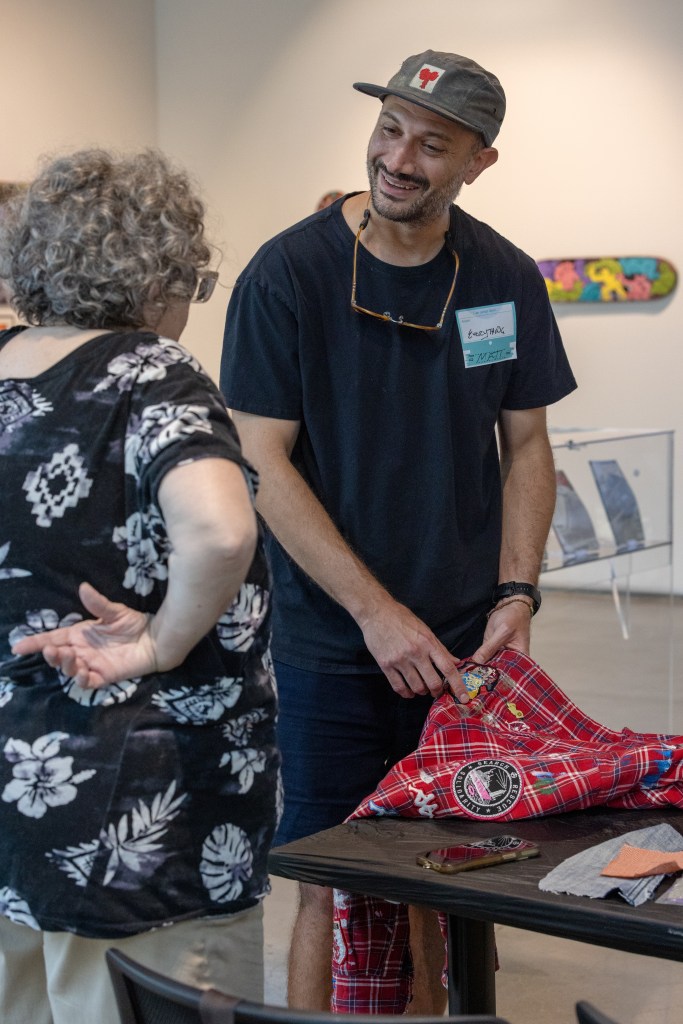
What is the philosophy of the skill share?
We take a collaborative approach to learning—where people share skills by seeing it done, trying it themselves, and then teaching it to someone else. Our Lead Mend-tor Alison Davis-Holland facilitates the circle and demonstrates each technique. Skilled Mend-tors will also be available to assist people.
We are seeking to simply carve out time to create and connect. The program is not about accuracy and perfection. It is about embracing the process and the inevitable imperfection of freehand work.
What are the benefits of our visible mending circles?
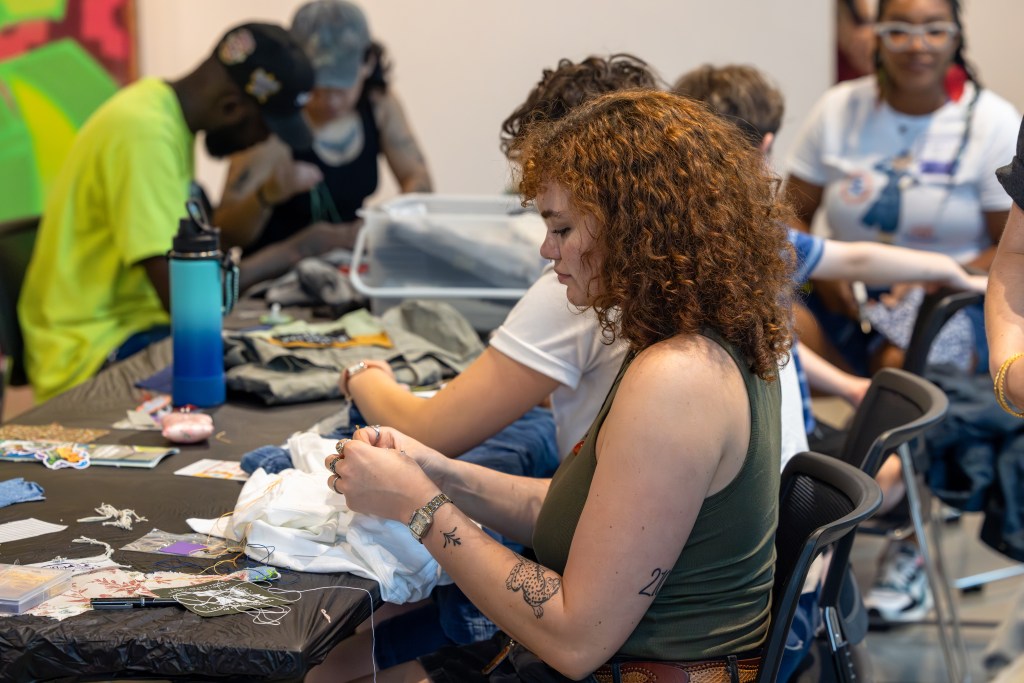
Visible mending circles nurture wellbeing at every level—supporting your body, mind, community, and the planet. Our gatherings offer a welcoming, low-pressure space where people can slow down, experiment, and reconnect with their creativity.
Through hands-on repair, participants engage in calming, rhythmic work that encourages focus, reduces stress, and embraces imperfection. At the same time, the social nature of the circle fosters meaningful connections and strengthens community ties.
By extending the life of our clothing together, we promote sustainable practices while creating spaces that support mental and physical wellbeing. Visible mending circles are not just about repair—they are about restoration, resilience, and collective care. Here are just some of the benefits of our programs:
Community Engagement & Social Connection
- Creates meaningful connection across diverse backgrounds, ages, identities, and skill levels
- Builds community bonds
- Provides social connection
- Provides a sense of belonging
- Provides collective purpose
Mental Wellbeing
- Brings on a flow state
- Calms the mind
- Reduces stress
- Builds resilience
- Increases joy
- Reduces anxiety and depression
- Increases self-esteem
- Fosters greater empathy for others
- Increases dopamine
- Provides a sense of accomplishment
- Shifts to a no-wrong-answers mindset
Physical Wellbeing
- Offers a soothing rhythmic practice
- Evens out your heart rate and breathing
- Lowers blood pressure
- Reduces pain
- Improves brain function
Sustainability
- Extends the life of textiles
- Reduces waste
- Reduces consumption
- Creates positive momentum to keep identifying opportunities for repair
What are the benefits of being creative?
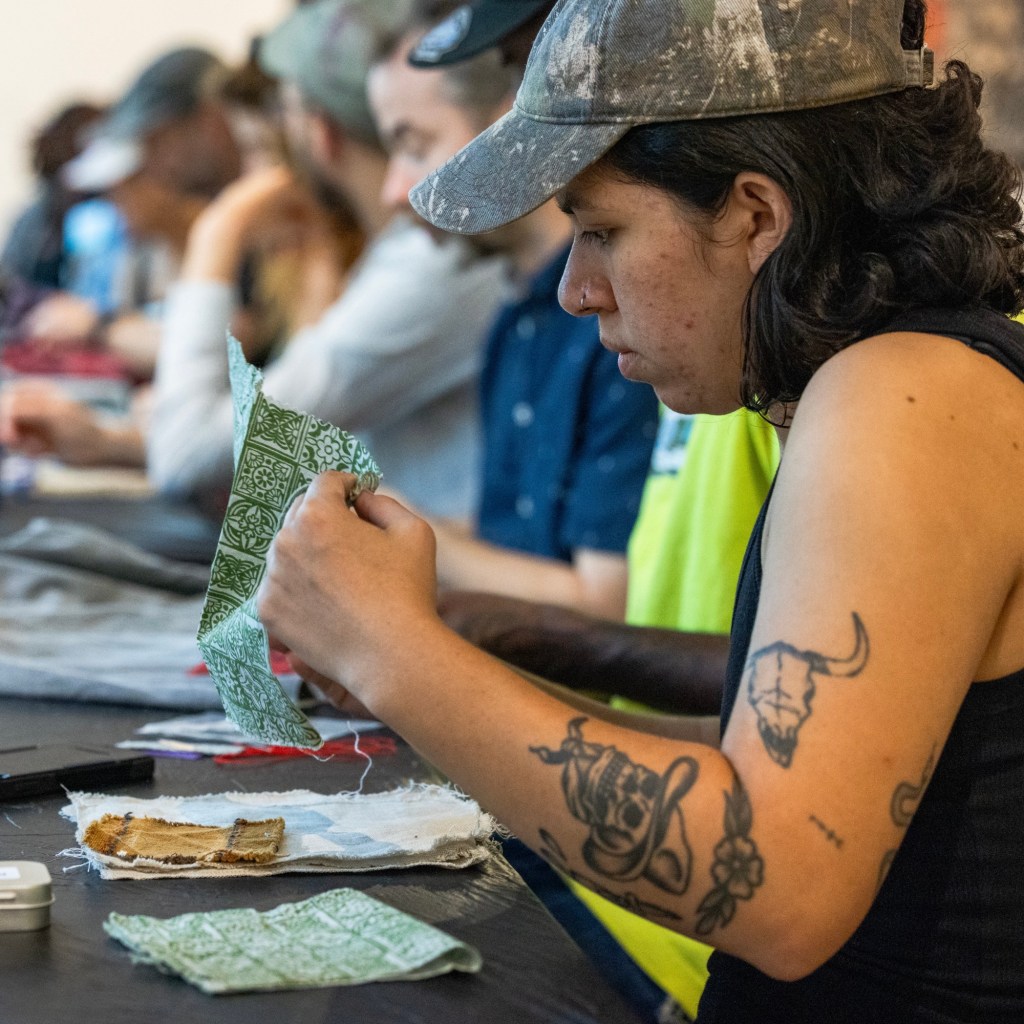
Being creative shifts our mindset into a free place where there are no wrong answers. These beneficial effects happen during the art process and are not based on the end product.
Creativity brings on a flow state, builds resilience, and increases joy. When we focus on something creative, novel, or fun, we make new neural pathways, increasing connectivity in the brain.
This makes us more emotionally resilient in a way that is similar to meditation. The release of dopamine brings an enhanced sense of well-being as well as improved motivation.
Research
Check out the research on the need for and benefits of mending in community.